Ekadashi Today: Decoding Its Powerful Astrological Impact on You
Ekadashi Today: Decoding Its Powerful Astrological Impact on You...
Ekadashi Today: Decoding Its Powerful Astrological Impact on You
Is it Ekadashi today? For many of you, this question might automatically trigger thoughts of fasting, special prayers, or perhaps just a general awareness of a significant day on the Hindu calendar. But what if I told you that Ekadashi is far more than just a religious observance? As an astrologer, I see Ekadashi as a powerful, recurring astrological alignment that profoundly impacts your mind, body, and spirit, regardless of your religious beliefs. It's a cosmic reset button, a potent opportunity to align with universal energies, and a day whose subtle influences can be felt by everyone.
Here at abhisheksoni.in, my goal is to demystify these ancient wisdoms and show you how to practically apply them to enrich your modern life. Today, let's dive deep into the astrological meaning of Ekadashi, unraveling its secrets and revealing how you can harness its energy for your greater well-being.
What Exactly is Ekadashi, Astrologically Speaking?
At its core, Ekadashi refers to the eleventh tithi (lunar day) of each of the two lunar fortnights in a Vedic month. There are typically two Ekadashis in a month – one in the Shukla Paksha (waxing phase of the Moon) and one in the Krishna Paksha (waning phase of the Moon). The word "Ekadashi" itself comes from Sanskrit: "Eka" meaning one and "Dasha" meaning ten, thus "eleven."
But why is the eleventh lunar day so special? In Vedic astrology, the Moon is considered the most significant planet after the Sun. It governs our mind, emotions, intuition, subconscious patterns, and overall mental well-being. The Moon's phases directly influence the tides, our bodily fluids, and our emotional state. Just as the ocean responds to the Moon's pull, so too do our internal waters and mental currents.
On Ekadashi, the Moon is in a specific energetic configuration, having completed ten days of its journey from either the New Moon or Full Moon. This particular alignment creates a unique energetic blueprint that influences the subtle energies of the planet and, consequently, all living beings. It’s not just a calendar date; it's a specific cosmic vibration that opens a window for introspection, purification, and spiritual acceleration.
The Lunar Cycle and Your Inner World
- Shukla Paksha Ekadashi (Waxing Moon): During this phase, the Moon is growing in light and strength. This Ekadashi is often associated with growth, expansion, and accumulating positive spiritual merit. It's a potent time for setting intentions and drawing in new, positive energies.
- Krishna Paksha Ekadashi (Waning Moon): As the Moon wanes, its light diminishes, signaling a time for release, letting go, and cleansing. This Ekadashi is excellent for purification, releasing old patterns, and detoxifying both mind and body.
Regardless of the phase, the underlying astrological principle remains: Ekadashi offers a powerful opportunity to tune into the Moon's potent energy and redirect it towards internal cleansing and spiritual growth.
The Moon's Dance: Why Ekadashi is Astrologically Potent
Think of the Moon as the conductor of your inner orchestra. Its strength and position in your birth chart reveal much about your emotional resilience, intuitive abilities, and how you process experiences. On Ekadashi, the Moon's energy reaches a particular peak or trough, creating an amplified field that affects us all.
From an astrological perspective, the number 11 carries significance. In numerology, 11 is a master number, representing intuition, spiritual insight, and illumination. When we connect this to the 11th tithi, it points to a day where the veil between the material and spiritual worlds can feel thinner, making us more receptive to subtle energies.
The practice of fasting on Ekadashi isn't merely a religious dictate; it's an ancient astrological technique designed to harmonize your inner being with the cosmic rhythm. By consciously reducing sensory input and physical burdens (through food), we allow the mind, which is ruled by the Moon, to quiet down. This creates space for clarity, intuition, and a deeper connection to our higher self.
Connecting to the Elemental Balance
Our bodies are composed of the five elements, and the Moon primarily influences the water element and our mental state. On Ekadashi, the gravitational pull of the Moon is thought to be higher, affecting the fluid retention and digestive processes within our bodies. By reducing food intake, especially grains (which are harder to digest and can lead to lethargy), we ease the burden on our digestive system, allowing the body's energy to be redirected towards self-healing and mental clarity. This is particularly crucial for individuals who have a challenging Moon placement in their birth chart, as they tend to be more susceptible to emotional fluctuations.
Ekadashi's Impact on Your Horoscope: A Universal Influence
While everyone experiences the general energetic shift of Ekadashi, its specific impact can be uniquely felt depending on your individual horoscope, particularly your Moon sign (Chandra Rashi) and the strength of your Moon (Chandra Bala).
- Those with a Strong Moon (well-placed, exalted, or in its own sign): If your Moon is strong in your birth chart, you might find Ekadashi to be a day of heightened intuition, profound insights, and deep emotional peace. Your spiritual practices may feel more potent, and you might experience significant breakthroughs in meditation or self-reflection.
- Those with a Weak Moon (debilitated, afflicted, or in a challenging house): If your Moon is weaker, you might feel more susceptible to the amplified energies of Ekadashi. This could manifest as increased emotional sensitivity, restlessness, anxiety, or even physical discomfort. However, this is precisely why observing Ekadashi can be incredibly beneficial for you – it offers a structured way to strengthen your Moon and bring balance to your emotions.
- General Impact Across All Signs: Regardless of your Moon's placement, Ekadashi encourages introspection. It's a day when the mind seeks less external stimulation and more internal dialogue. You might find yourself naturally drawn to quiet contemplation, or conversely, feel a stronger pull towards escapism if you're not consciously engaging with its energy. Decision-making might feel clearer or, if agitated, more impulsive. Understanding this allows you to consciously choose how to channel this potent energy.
The Science of Fasting: More Than Just Abstinence
The practice of fasting on Ekadashi isn't just a symbolic gesture; it's a sophisticated method with deep roots in both ancient wisdom and modern understanding of well-being. From an astrological perspective, fasting helps to purify the lunar energies within us.
Astrological Rationale for Fasting
- Mind-Body Connection: The Moon governs the mind and digestion. By easing the digestive burden, energy is freed up for mental clarity and spiritual pursuits. This aligns the mind with the higher vibrations of Ekadashi.
- Sensory Withdrawal (Pratyahara): Fasting is a form of Pratyahara, the fifth limb of Yoga, which involves withdrawing the senses from external objects. This helps to quiet the mind and turn attention inward, enhancing focus during meditation and prayer.
- Detoxification: Astrologically, the Moon influences bodily fluids and waste elimination. Fasting aids in the natural detoxification process, clearing physical and energetic blockages.
- Strengthening Willpower: The discipline of fasting strengthens your willpower, a quality indirectly linked to the strength of your internal planets and your ability to control your mind (Moon).
Different Approaches to Ekadashi Fasting
Remember, fasting is deeply personal. Listen to your body and consult a healthcare professional if you have any health concerns. The goal is purification, not deprivation or harm.
- Nirjala Vrat (Waterless Fast): The most austere, involving no food or water for the entire day. This is generally recommended only for healthy individuals who are experienced with fasting and have strong spiritual resolve.
- Phalahar Vrat (Fruit Fast): Consuming only fruits, water, and milk/dairy products. This is a common and gentler approach, allowing for nutrient intake while still observing the spirit of the fast.
- Partial Fast (Grains-Free): Avoiding all grains (rice, wheat, corn, beans, lentils) and non-vegetarian food, but consuming vegetables, roots, fruits, dairy, and water. This is a highly recommended and accessible option for most people.
- One-Meal Fast: Eating only one sattvic meal (without grains or non-veg) during the day, usually in the evening.
The key is to avoid foods that are heavy, processed, or stimulate the senses, allowing your internal energies to settle.
Practical Insights: Navigating Ekadashi for Your Well-being
Now that we understand the 'why,' let's explore the 'how.' Here's how you can practically observe Ekadashi and harness its potent astrological energies, tailored to your unique journey.
Understanding Your Chart for Personalized Guidance
To truly personalize your Ekadashi experience, understanding your birth chart is invaluable. While I offer general guidance here, a professional reading can offer specific insights.
- Check Your Moon Sign (Chandra Rashi): Knowing your Moon sign (e.g., Aries Moon, Cancer Moon) gives you insight into your emotional nature and how you likely react to lunar influences.
- Assess Moon's Strength: An astrologer can tell you if your Moon is strong, weak, or afflicted. This helps determine how sensitive you might be to Ekadashi's energies and what specific practices might be most beneficial for you.
Remedies & Practices for Ekadashi
1. Dietary Adjustments:
Even if you cannot observe a full fast, making conscious dietary choices is powerful.
- Avoid: Grains (rice, wheat, lentils, beans, corn, oats), meat, fish, eggs, onions, garlic, mushrooms. These foods are considered 'tamasic' or 'rajasic' (heavy or overly stimulating) and can hinder the subtle energy flow.
- Focus On: Fruits, vegetables (especially root vegetables), nuts, dairy products (milk, paneer, yogurt), sweet potatoes, buckwheat, sago (sabudana), and water. These are 'sattvic' foods, promoting purity and clarity.
- Hydration: Drink plenty of water, herbal teas, or fresh fruit juices, especially if you are fasting.
2. Mental & Spiritual Practices:
This is where the true power of Ekadashi lies – in directing your mind.
- Meditation & Mindfulness: Dedicate extra time to meditation. Focus on your breath, observe your thoughts without judgment, and cultivate inner stillness. Even short, frequent mindfulness breaks can make a difference.
- Chanting Mantras: Chanting is a powerful way to purify the mind and connect with divine energy.
- "Om Namo Bhagavate Vasudevaya": A potent mantra dedicated to Lord Vishnu, the preserver, who is deeply associated with Ekadashi.
- Vishnu Sahasranama: Reciting or listening to the thousand names of Vishnu is considered highly auspicious.
- Chandra Mantras: Mantras to strengthen the Moon, such as "Om Som Somaya Namaha."
- Reading Sacred Texts: Engage with scriptures, spiritual books, or philosophical texts that uplift your spirit and expand your understanding.
- Self-Reflection & Journaling: Use the quiet energy of the day to reflect on your life, your goals, your emotional patterns. Journaling can be a great way to process thoughts and gain clarity.
- Acts of Kindness (Seva): Perform selfless service or acts of charity. This elevates your own consciousness and spreads positive energy.
3. Physical Practices:
- Gentle Yoga & Walking: Avoid strenuous physical activity. Opt for gentle yoga asanas, stretching, or a peaceful walk in nature. The idea is to conserve energy and promote internal harmony.
- Rest: Allow yourself adequate rest. This is a day for internal recharge, not external exertion.
4. Breaking the Fast (Parana):
Breaking the Ekadashi fast correctly is as important as observing it. It should be done during a specific period the day after Ekadashi, known as Parana. Consult a Panchang (Vedic calendar) for the exact Parana time for your location.
- How to Break: Typically, one breaks the fast by consuming a small amount of rice or other grains that were avoided during the fast. This signifies the completion of the vow and re-entry into regular eating patterns.
- Avoid Overeating: After a fast, it's crucial not to overeat. Start with light, easily digestible food to gently awaken your digestive system.
Ekadashi and Specific Life Areas: Where You Might Feel It Most
The amplified energies of Ekadashi don't just affect your internal state; they can also ripple out into various aspects of your life:
- Relationships: With heightened emotional sensitivity, you might find your relationships either feeling more deeply connected or more prone to minor misunderstandings. Practice patience, empathy, and conscious communication. Use the day to forgive and release grievances.
- Career & Finances: This is an excellent day for clear thinking, but perhaps not for making major, impulsive financial decisions. Use the day for strategic planning, reviewing goals, and gaining perspective rather than initiating new ventures. The clarity gained can lead to better long-term choices.
- Health: Beyond the benefits of fasting, Ekadashi promotes an internal cleansing. Pay attention to any signals your body sends. It's a prime time for detoxification and addressing any subtle health imbalances through mindful eating and rest.
- Spirituality: This is arguably the most impacted area. Ekadashi offers a direct portal to deeper spiritual experiences. Your meditations might be profound, your prayers more heartfelt, and your connection to the divine more palpable. It's a day for soul-searching and reconnecting with your purpose.
The Long-Term Benefits of Regular Ekadashi Observance
Embracing Ekadashi isn't just about one day; it's about integrating a powerful practice into your life that yields continuous benefits. Regularly observing Ekadashi, even in a modified way, can lead to:
- Improved Mental Clarity: Your mind becomes less cluttered, making decision-making easier and reducing mental fog.
- Enhanced Emotional Stability: You'll develop greater resilience to emotional ups and downs, finding a more centered state.
- Deeper Intuition: As the mind quiets, your inner voice becomes clearer, guiding you with wisdom and foresight.
- Better Physical Health: Regular detoxification and mindful eating can lead to improved digestion, increased energy, and a greater sense of physical well-being.
- Stronger Spiritual Connection: You'll foster a consistent relationship with your spiritual self, aligning more closely with your higher purpose and universal energies.
- Greater Discipline & Willpower: The practice strengthens your resolve, empowering you in all areas of life.
Ekadashi is truly a gift from the cosmos, a regular reminder to pause, reflect, and realign. It's an astrological opportunity presented to us twice a month to step away from the mundane, reduce external distractions, and turn our gaze inward. By understanding its profound astrological impact and consciously engaging with its energies, you're not just observing a tradition; you're actively participating in your own journey of growth, purification, and spiritual awakening.
So, next time it's Ekadashi, embrace it not as a burden, but as a powerful astrological tool designed to help you decode your inner world and align with the benevolent forces of the universe. May your Ekadashi observances bring you immense peace, clarity, and spiritual progress.

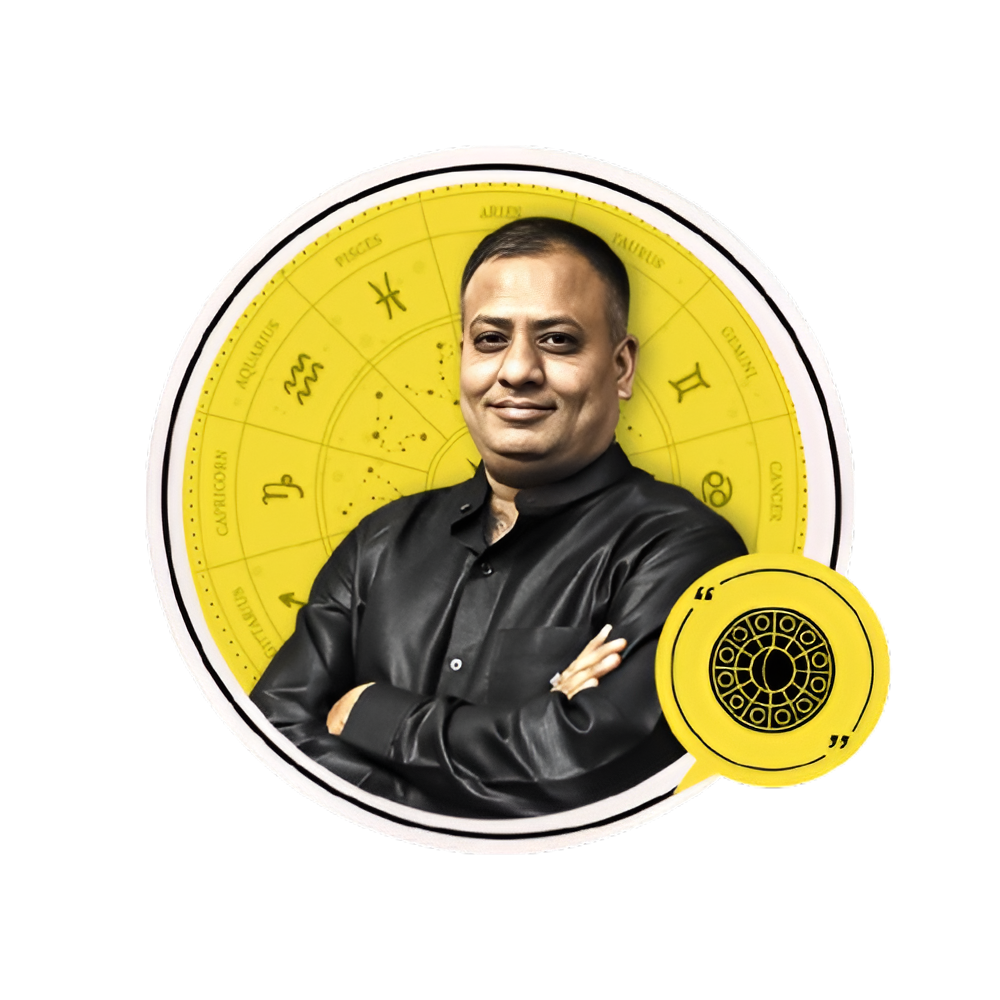
Astrologer Abhishek Soni
India's Top Celebrity Astrologer | 50,000+ Consultations | Vedic Astrology, Numerology & Vastu Expert
Book Consultation